HeyGen vs RizzGen: Which AI Video Tool Is Right for You in 2026?
HeyGen is one of the most recognized names in AI video — built around digital avatars, text-to-video narration, and enterprise-grade localization. RizzGen is built around something fundamentally different: scene-by-scene creative control, multi-model video generation, and cinematic output quality.
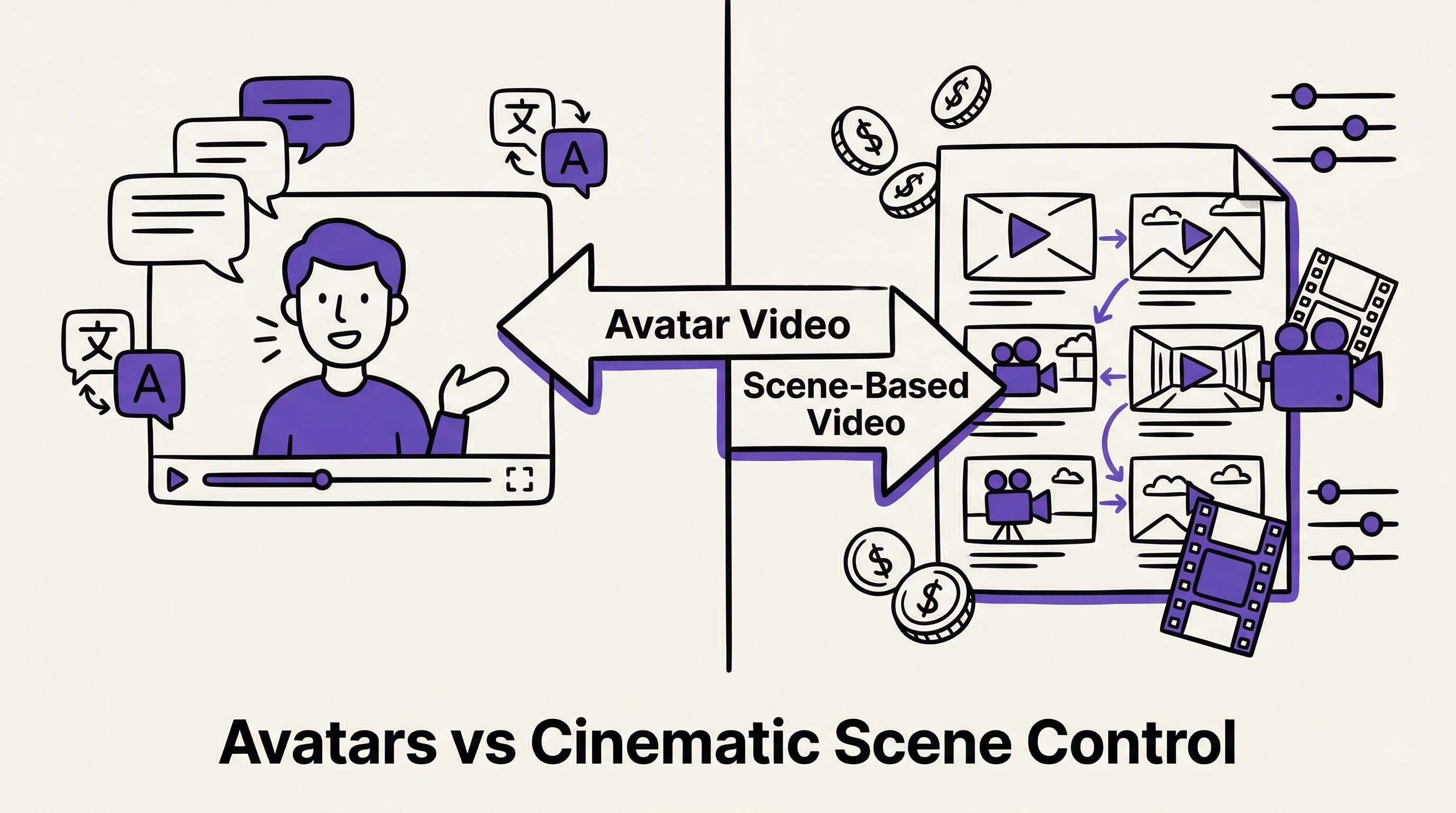 HeyGen focuses on avatar presenters, while RizzGen focuses on cinematic scene-level creative control. Illustration created with RizzGen.
This comparison will help you understand which tool fits your actual workflow.
At a Glance: Key Differences
| Feature | HeyGen | RizzGen |
|---|---|---|
| Core model | Avatar-based video generation | Scene-based, multi-model video creation |
| AI video models | Proprietary HeyGen model | Sora 2, Kling 2.5, Veo 3.1, Wan 2.5, LTX 2 + more |
| Scene editing | Full-video regeneration | Edit individual scenes without touching others |
| Voiceover | Avatar lip-sync + TTS | AI voice generation (multiple accents/genders/languages) |
| Music & SFX | Limited | AI music generation + sound effects, in-platform |
| Pricing | Subscription ($24–$120/month) | Credit-based (all features unlocked, pay per generation) |
| Best for | Corporate explainers, localized HR/training content | Cinematic video, educational content, brand storytelling |
When HeyGen Is the Better Choice
HeyGen excels if your primary need is avatar-driven video — particularly for enterprise use cases like HR onboarding, compliance training, and multi-language corporate communications. If you need a digital spokesperson who maintains consistent visual identity across dozens of videos in 20 languages, HeyGen's avatar and translation stack is purpose-built for that.
HeyGen shines when: You need the same "person" presenting in multiple languages, your content is presenter-focused (not visually complex), and you're producing high volumes of similar-format corporate videos monthly.
When RizzGen Is the Better Choice
RizzGen wins when you care about the visual quality of the content itself — not just the presenter.
If you're a content creator making YouTube videos, brand stories, or educational explainers where the visual narrative matters as much as the voiceover, you'll hit HeyGen's ceiling quickly. Avatars talking to camera don't create the kind of cinematic storytelling that builds audiences.
RizzGen also wins on pricing for variable workflows. HeyGen's subscription means you pay the same whether you make 3 videos or 30 that month. RizzGen's credit model means your cost scales with your actual output — nothing wasted.
Multi-Model Access
HeyGen uses its proprietary model for everything. RizzGen gives you access to 10+ specialized models:
- Sora 2 — Best for cinematic motion and complex scene composition
- Kling 2.5 — Superior for realistic human movement and physics
- Veo 3.1 — Google's latest, excellent for text rendering in video
- Wan 2.5 — Fast, cost-efficient for rapid iteration
- LTX 2 — Great for stylized and artistic outputs
Each model has strengths. RizzGen lets you use the right one for each scene — or A/B test them without switching platforms.
The Scene-Editing Advantage
The biggest practical difference between the two tools: what happens when you need to fix something.
In HeyGen, changing one scene typically means regenerating the full video. In RizzGen, every scene is independent. Don't like how Scene 4 looks? Regenerate just that clip — your voiceover, music, and other scenes are untouched. This "no restart penalty" workflow is a meaningful time-saver for anyone making more than a handful of videos per month.
The hidden cost of full-regen: When you regenerate an entire HeyGen video to fix one 5-second segment, you burn credits (or time) re-rendering content that was already fine. For a 10-scene video, that's 90% wasted generation.
Workflow Comparison: Real Example
Let's say you're creating a 3-minute educational video about climate change:
HeyGen workflow:
- Write script
- Select avatar and background
- Generate full video
- Watch and note issues
- Regenerate full video to fix issues
- Repeat until satisfied
- Export and add music in separate tool
RizzGen workflow:
- Write script (or have Rizzi help structure it)
- Get automatic scene breakdown
- Generate visuals scene-by-scene
- Regenerate only scenes that need adjustment
- Add AI voiceover in-platform
- Add AI-generated background music
- Export final video
The RizzGen workflow is more modular — and faster when you need to iterate.
Pricing Reality Check
| Usage Pattern | HeyGen Cost | RizzGen Cost |
|---|---|---|
| 5 videos/month | $24–$48 (subscription) | ~$15–$25 (credits) |
| 20 videos/month | $48–$89 (subscription) | ~$40–$60 (credits) |
| 3 videos one month, 25 the next | Same monthly price both months | Pay for exactly what you generate |
| Unused capacity | Lost at month end | Credits don't expire (paid plans) |
Who Should Use Which Tool
Choose HeyGen if:
- You need avatar-based presenters for corporate content
- Enterprise localization (20+ languages) is a core requirement
- You want a consistent digital spokesperson at scale
- Your videos are presenter-focused, not visually narrative
- You produce predictable volumes monthly (subscription makes sense)
Choose RizzGen if:
- You want cinematic, non-avatar video with visual storytelling
- Scene-level creative control matters to your workflow
- You need access to multiple AI video models for different scenes
- Your video output varies month to month
- You want integrated voiceover, music, and SFX in one platform
- You prefer pay-for-what-you-use over subscription lock-in
Bottom Line
HeyGen and RizzGen solve different problems. HeyGen is an avatar engine for corporate scale. RizzGen is a creative studio for cinematic video.
If you're a creator building an audience through visually compelling content, RizzGen gives you the control and quality that avatar-based tools can't match. If you're an enterprise team localizing HR training at volume, HeyGen's avatar consistency is hard to beat.
The real question isn't which tool is "better" — it's which tool matches what you're actually trying to create.
See the Difference Yourself
Try RizzGen's scene-based workflow with free starter credits. No subscription required.
FAQ
Can RizzGen do avatar videos like HeyGen?
No — and that's intentional. RizzGen focuses on cinematic scene generation rather than avatar presenters. If you need a digital spokesperson, HeyGen is the better choice. If you want visual storytelling without avatars, RizzGen wins.
Is RizzGen really cheaper than HeyGen?
For variable workflows, typically yes. If you make 5 videos one month and 20 the next, RizzGen's credit model costs less than maintaining a subscription for peak capacity year-round. For consistent high-volume production, compare based on your specific usage.
Does HeyGen have scene-based editing?
HeyGen organizes content by slides/scenes, but changing one element often requires regenerating the full video. RizzGen treats each scene as an independent asset that can be regenerated, edited, or replaced without affecting the rest of the timeline.
Which tool has better video quality?
It depends on the use case. HeyGen's avatars are polished for presenter-style content. RizzGen's multi-model approach produces more cinematic, visually complex outputs for storytelling content. For pure visual fidelity in non-avatar video, RizzGen's access to Sora 2 and Kling 2.5 provides industry-leading quality.
Can I switch from HeyGen to RizzGen easily?
Yes. RizzGen accepts standard script formats, and you can import your existing scripts to generate scene-based versions. The workflow is different (scene-based vs avatar-based), but there's no lock-in preventing you from trying both.